
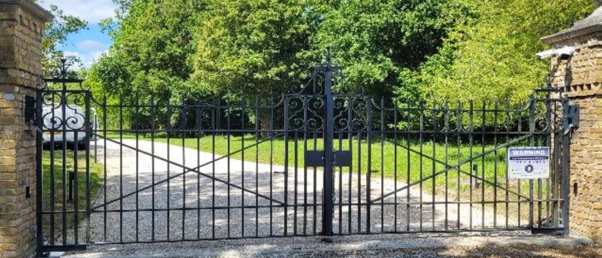
When choosing a new automated gate, the design is only part of the decision. The material used to manufacture the gate can have a significant impact on its appearance, weight, durability, maintenance requirements and how well it works with the automation.
From traditional hardwood gates to contemporary aluminium, mild steel and composite-clad designs, there are plenty of options available.
The right choice depends on the property, the design, the size of the gate, the level of use and, importantly, the automation system being specified.
Hardwood remains a popular choice for residential gates, particularly where a traditional or premium appearance is required.
A good-quality hardwood can be extremely durable and, when properly constructed and maintained, can provide many years of service.
Pros:
• Natural and traditional appearance
• Available in a wide range of styles and finishes
• Strong and durable when properly manufactured
• Can complement period and traditional properties particularly well
• Can be stained, oiled or otherwise finished to suit the property
Cons:
• Requires ongoing maintenance depending on the chosen finish
• Timber naturally moves with changes in moisture and temperature
• Can be considerably heavier than some metal alternatives
• Poorly designed or constructed timber gates can distort over time
• Quality and species of timber make a significant difference
Softwood may initially appear attractive because of its lower cost, but it is generally not our preferred material for a long-term automated gate installation.
Softwood is typically less dense and less durable than suitable hardwoods and can be more susceptible to movement, damage and deterioration.
When combined with the weight and repeated movement of an automated gate, this can result in problems over time.
For a quality automated gate, we would generally recommend a suitable hardwood rather than softwood, particularly where the intention is to create a long-lasting installation.
The quality of the construction is just as important as the timber itself. The gate needs to be properly framed, braced and engineered to cope with its own weight and the forces generated during operation.
Mild steel is one of the most versatile materials for automated gates.
It can be fabricated into almost any design, from simple modern frames to highly decorative traditional gates.
Steel can also provide excellent structural strength, making it particularly suitable for larger gates.
Pros:
• Very strong and structurally robust
• Almost unlimited design possibilities
• Well suited to large and heavy gates
• Can be galvanised and/or powder coated for long-term protection
• Suitable for both traditional and contemporary designs
• Can be manufactured to suit unusual openings and requirements
Cons:
• Heavier than aluminium
• Requires appropriate corrosion protection
• Poor-quality fabrication or finishing can lead to premature corrosion
• Large solid gates can be affected by wind loading
• Heavier gates may require more substantial automation and supporting structures
For many automated gate installations, mild steel provides an excellent balance between strength, flexibility and design.
A properly fabricated and finished steel gate can also be extremely durable, particularly when hot-dip galvanising and a suitable powder-coated finish are used.
Aluminium is increasingly popular for modern automated gates, particularly where a lightweight and low-maintenance solution is required.
Because aluminium is significantly lighter than steel, it can be particularly useful where reducing the load on the gate automation is beneficial.
Pros:
• Lightweight compared with steel
• Naturally resistant to corrosion
• Low maintenance
• Excellent option for contemporary designs
• Available in a wide range of powder-coated finishes
• Can reduce the mechanical load placed on the automation
Cons:
• Generally less structurally robust than steel
• Can be more susceptible to dents and physical damage
• Certain designs can require additional structural reinforcement
• Large lightweight gates can still present significant wind-loading considerations
• Can be more expensive depending on the design and construction
Aluminium can be an excellent choice for residential and commercial gates where a clean, contemporary appearance and low maintenance are priorities.
However, “lightweight” does not automatically mean “suitable”. The size, construction and design of the gate still need to be considered carefully.
Another increasingly popular option is a steel-framed gate clad with composite material.
These gates combine a strong steel structural frame with composite boards or panels to create the appearance of a timber or contemporary solid gate without relying entirely on timber for the structure.
Pros:
• Strong internal steel structure
• Wide range of colours and finishes
• Can provide a modern timber-style appearance
• Composite materials generally require less maintenance than traditional timber
• Can offer good resistance to weathering
• Can be designed around a wide range of automation systems
Cons:
• Usually more expensive than a basic steel gate
• Composite materials vary considerably in quality
• The steel frame still needs appropriate corrosion protection
• Solid or heavily clad designs can create significant wind loading
• The finished gate can still be relatively heavy depending on the construction
A steel-framed composite gate can be particularly effective where a client wants the appearance of a substantial timber gate but prefers a lower-maintenance finish.
One of the most important considerations when choosing a gate material is weight.
The heavier the gate, the greater the demands placed on its hinges, posts, foundations and automation.
This doesn’t mean that heavy gates are unsuitable for automation. It simply means that the system needs to be designed accordingly.
A large hardwood or steel gate may require substantially different automation from a lightweight aluminium gate. The size and weight of the gate can also influence the choice between electromechanical and hydraulic automation.
The material itself isn’t the only consideration.
A gate with a relatively open design allows wind to pass through it. A solid or heavily clad gate can behave much more like a sail.
This can become particularly important with large gates or exposed properties.
A large timber, composite or solid steel gate may therefore require stronger supporting structures and more robust automation than an open-bar design of the same overall dimensions.
There isn’t a single “best” gate material.
A traditional country property might suit a hardwood gate, while a contemporary property may benefit from aluminium. A large entrance requiring significant structural strength may lend itself to mild steel, while a steel-framed composite gate can provide a combination of structural strength and a low-maintenance appearance.
The important thing is that the gate material, design and automation are considered together.
A common mistake is to choose the appearance of the gate first and then try to find an automation system capable of operating it.
A professional gate automation contractor should approach the process the other way around.
The site, opening size, gate design, material, weight, wind loading, hinges, posts, foundations, frequency of use and required safety equipment should all be considered before the final system is specified.
This is particularly important with automated gates because the gate itself forms part of the machine.
A beautifully manufactured gate is of little benefit if it is too heavy for the supporting structure, poorly hinged or unsuitable for the automation selected.At Gatedoctors, we look at the complete installation rather than simply supplying a gate and a motor.
Our aim is to make sure the gate, structure, automation and safety systems work together as one properly designed installation.
If you’re considering new automated gates and aren’t sure which material or design is right for your property, get in touch today and we’d be happy to discuss the options and recommend a solution based on the site and how the gates will actually be used.